
e-KYC: Aadhaar at the bank and the phone shop
Electronic know-your-customer checks let a bank or telecom company confirm who you are in seconds. What the courts allowed, what they struck down, and the PAN rule that still applies.
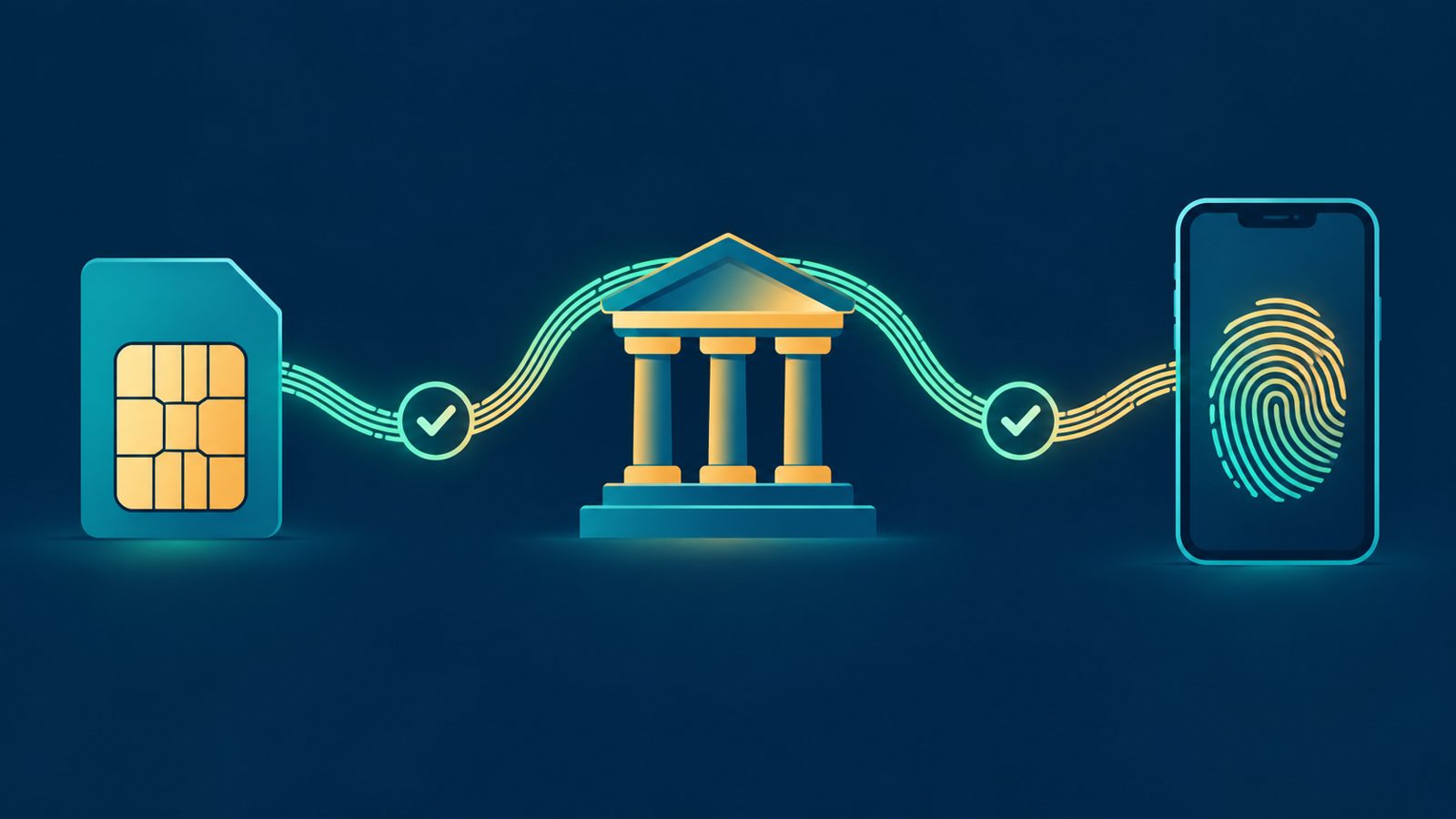
Banks, telecom companies and other regulated businesses must check who their customers are, a rule known as know your customer (KYC). With Aadhaar e-KYC, the customer authenticates with a fingerprint, iris or OTP, and UIDAI sends the business the customer's name, address, date of birth, gender and photograph. No photocopies change hands.
What the courts decided
In 2017 the government ordered telecom companies to re-verify every mobile subscriber using Aadhaar, and banks were told to link accounts to Aadhaar. On 26 September 2018 the Supreme Court struck down both requirements, and section 57 of the Aadhaar Act, which had allowed private companies to demand Aadhaar. Details are in Aadhaar and the right to privacy.
In 2019 Parliament amended the law so that banks and telecom licensees may use Aadhaar e-KYC or offline verification, but only if the customer chooses it. They must accept passports and other notified documents as well.
The PAN rule
One link the court upheld is between Aadhaar and PAN, the permanent account number used for income tax. Section 139AA of the Income-tax Act, added in 2017, requires most PAN holders to link the two. The deadline passed on 30 June 2023; PANs not linked by then became inoperative, and linking now costs a fee of Rs 1,000. The Income Tax Department's e-filing portal has the link-Aadhaar service.
Consent in practice
In December 2017 UIDAI suspended the e-KYC licence of Bharti Airtel and Airtel Payments Bank after reports that customers verifying their SIMs had payments bank accounts opened without their informed consent, and that cooking-gas subsidies had been redirected into them. It is the clearest example of why the 2019 law put consent at the centre of e-KYC.
Sources
- Justice K.S. Puttaswamy (Retd) v Union of India (2019) 1 SCC 1.
- Aadhaar and Other Laws (Amendment) Act, 2019; PRS Legislative Research bill summary.
- Income-tax Act, 1961, section 139AA; Central Board of Direct Taxes notifications on PAN-Aadhaar linking, 2023.
- Unique Identification Authority of India, interim order on Bharti Airtel and Airtel Payments Bank e-KYC, December 2017.