Aadhaar and direct benefit transfer
India pays many subsidies straight into bank accounts, matched by Aadhaar. How the money moves, what the savings claims rest on, and what happens when the match fails.
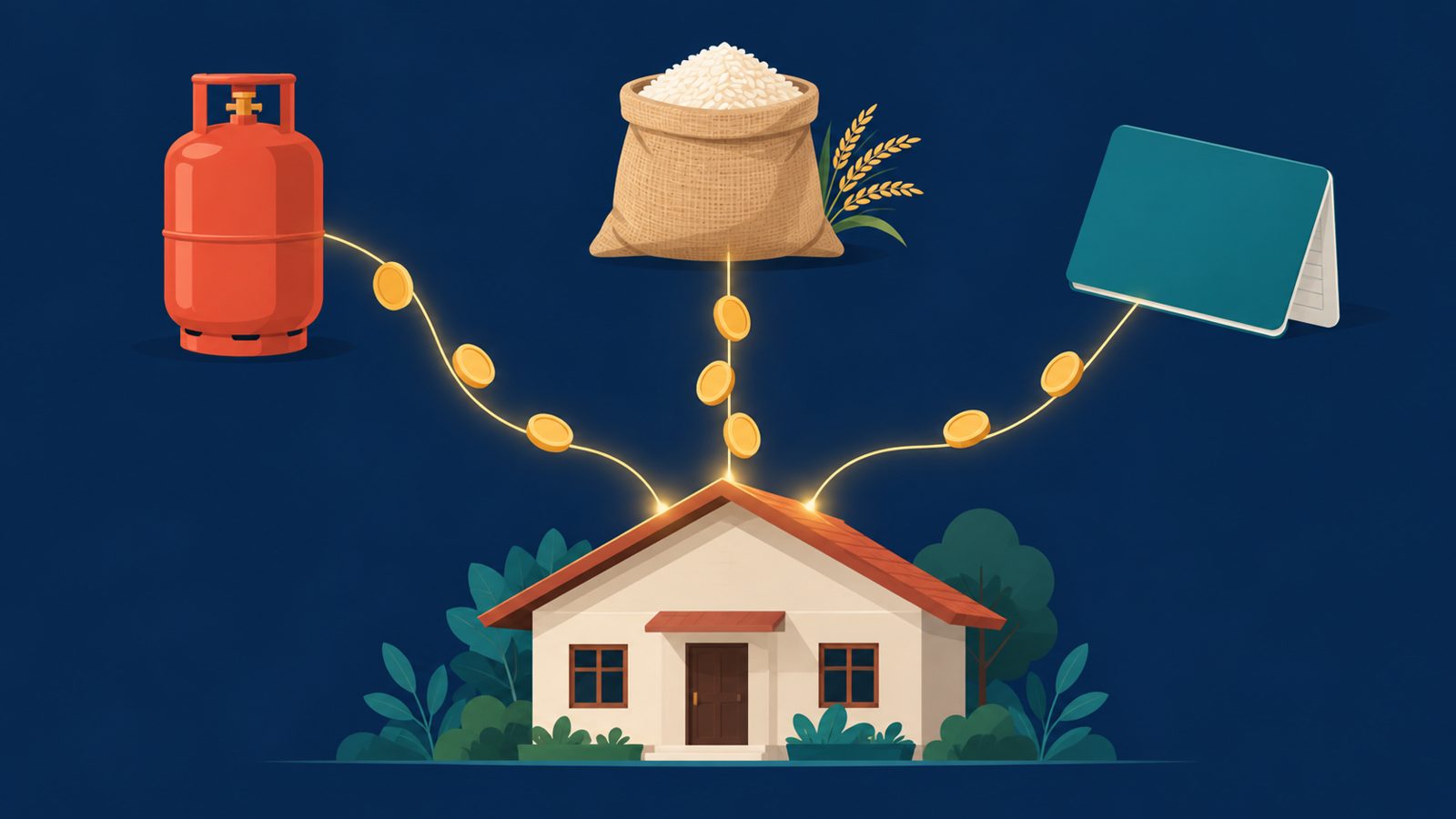
Direct Benefit Transfer (DBT) pays subsidies, pensions, scholarships and wages into people's bank accounts instead of through intermediaries or goods. India began DBT on 1 January 2013. Aadhaar is how the government knows which account belongs to which beneficiary. The government's DBT Mission publishes scheme-by-scheme figures at dbtbharat.gov.in.
How the money moves
- A department sends a list of beneficiaries and amounts, each identified by Aadhaar number.
- The payment goes through the Aadhaar Payment Bridge run by the National Payments Corporation of India.
- NPCI's mapper looks up which bank account the Aadhaar number is "seeded" to. If a person has seeded several accounts, the most recently seeded one receives the money.
- The bank credits the account. The beneficiary can withdraw at a branch, an ATM, or a micro-ATM using a fingerprint.
The last-seeded rule matters: when an account is seeded without a person's knowledge, their subsidy can quietly move to a different bank.
The cooking-gas test
PAHAL, the cash transfer for cooking-gas (LPG) subsidy, was relaunched on 15 November 2014 and extended nationwide on 1 January 2015. It became the headline example of Aadhaar savings. The CAG's audit found that most of the fall in the subsidy bill in 2015-16 came from lower crude oil prices: Rs 21,552.28 crore, against Rs 1,763.93 crore from reduced cylinder sales. The full comparison is in The multiple facts of Aadhaar.
When the match fails
Removing duplicates and removing real people look the same in a spreadsheet. In September 2017, in Simdega district of Jharkhand, 11-year-old Santoshi Kumari died. Activists said she starved after her family's ration card was cancelled for not being linked to Aadhaar; a block development officer confirmed the cancellation. The authorities said she died of malaria. The case is still the most cited example of exclusion from welfare by authentication.
In 2018 the Supreme Court upheld Aadhaar for welfare, but said children must not be denied benefits for lack of it. See Aadhaar and the right to privacy.
Sources
- DBT Mission, Cabinet Secretariat, Government of India, dbtbharat.gov.in.
- Comptroller and Auditor General of India, compliance audit of the PAHAL (DBTL) scheme, 2016, as reported by Moneylife and FactChecker.
- Scroll.in and The Wire, reports on the death of Santoshi Kumari, Simdega, October 2017.
- Justice K.S. Puttaswamy (Retd) v Union of India (2019) 1 SCC 1.